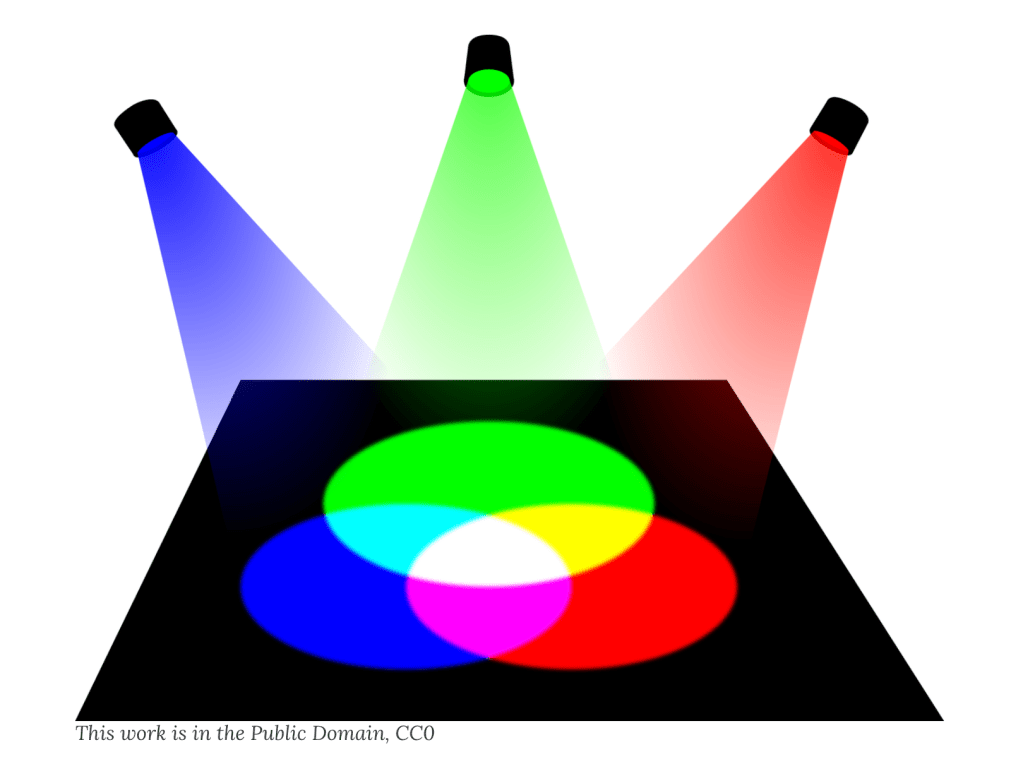
Within intersectional frameworks, race, class, gender, sexuality, age, ability, and other aspects of identity are considered mutually constitutive; that is, people experience these multiple aspects of identity simultaneously and the meanings of different aspects of identity are shaped by one another. — Milliann Kang et al., Introduction to Women, Gender, Sexuality Studies, UMass Amherst.
I don’t remember where I first heard the term “intersectionality,” but I vividly recall it sounded like academic bafflegab to me. It wasn’t until two or three years later that it dawned on me that it has something to do with intersections. (Well, duh!) How do things like race, social class and gender intersect in a person’s life? Or a society’s institutions?
Like so many terms in our combative, hyperpartisan culture — “woke,” for example, “liberal” or MAGA, even “evangelical” — it’s been defined by its ideological enemies. So at first I would have defined intersectionality in terms not far different from this 2018 entry in the crowdsourced online Urban Dictionary:
n. An all-you-can-eat buffet of mental illnesses and victim statuses.
The definition, by “Raccoon,” gives this helpful example of usage:
Like OMG, I’m just one identity badge away from getting my intersectionality index up to 10! I’m such a victimized minority underdog. Catch up with you guys at the safe space!
In an explainer for Vox, staff writer Jane Coaston quotes several conservative pundits. Prominent among them is right-wing provocateur Ben Shapiro, who describes intersectionality as “a form of identity politics in which the value of your opinion depends on how many victim groups you belong to. At the bottom of the totem pole is the person everybody loves to hate: the straight white male.” Shapiro concludes, “But what do I know? I’m just a straight white male.”
Actually, the term was coined in 1989 by Kimberlé Crenshaw, a law school professor at UCLA and Columbia, to describe how a person’s social identities overlap and intersect. The dictionary definition is straightforward enough. Webster-Merriam has this:
in·ter·sec·tion·al·i·ty ˌin-tər-ˌsek-shə-ˈna-lə-tē; the complex, cumulative way in which the effects of multiple forms of discrimination (such as racism, sexism, and classism) combine, overlap, or intersect especially in the experiences of marginalized individuals or groups. [Links in the original]
But the culture warriors have had a field day with it. In 2020 she was asked by Time magazine how she would describe it now.
“These days, I start with what it’s not, because there has been distortion,” she replied. “It’s not identity politics on steroids. It is not a mechanism to turn white men into the new pariahs. It’s basically a lens, a prism, for seeing the way in which various forms of inequality often operate together and exacerbate each other.”
Clear enough? “We tend to talk about race inequality as separate from inequality based on gender, class, sexuality or immigrant status,” Crenshaw added. “What’s often missing is how some people are subject to all of these, and the experience is not just the sum of its parts.”
Bottom line: Prune back the academic bafflegab, and it’s basic common sense.
Looking at it through a Dominican prism
There’s another wrinkle to the discussion of intersectionality that goes beyond identity markers. I think it’s grounded in a broader sense of social justice, and it makes a lot of sense to me. I first encountered it during a dialog that brought together Dominican sisters and associates in Springfield (over Zoom in my case) early in 2022 to discuss Pope Francis’ encyclical Laudato Si’. (I blogged about it HERE.) As participants, we were asked to reflect on this question:
What have I gleaned from my reflection on the excerpts from Laudato Si’ that points to the intersectionality of the whole of life on Earth? How does this growing understanding enhance my spirituality and challenge my behaviors? [Italics in the original.]
A lot of food for thought there. We were given this definition, which I hadn’t seen elsewhere but makes a lot of sense to me:
Intersectionality refers to the reality that all things are interdependent, intimately connected to each other. Everything contributes to everything else. No one issue is separate and apart from any other.
Finally, we were given this quote from the encyclical: It cannot be emphasized enough how everything is interconnected.” More food for thought.
An even wider context appeared a few months later in the May 2022 issue of Where Justice and Truth Meet, a newsletter published by the Springfield Dominican sisters’ Justice, Peace and Integrity of Creation Committee:
Intersectionality provides a prism-like lens through which we recognize the connections between issues of social justice. Different forms of social discrimination are inextricably linked. Whether based on sexual orientation or identity, race or ethnicity, or other factors like economic status or religion, discrimination is rooted in prejudice based on identity and the need to identify with a particular group. It leads to division, hatred and even dehumanization. Such prejudice is most often rooted in our own irrational fears.
How to break down these societal barriers? It begins, like so many things, with the individual. “Encountering another as other involves finding out what questions, concerns, needs, loves, and values they are living and to make those, at least in part, my own.” Or this, “to listen deeply to one another and to the brokenness of the world.”
The Dominican sisters’ newsletter brings together issues as disparate as violence against LGBTQ persons, the mass murder of Black shoppers in Buffalo, the racist “great replacement” theory, anti-immigration rhetoric, antisemitism, cultural genocide, global food insecurity exacerbated by the Ukraine war, and bombing near the Zaporizhia power station. Two (verbatim) excerpts:
- As we study and understand the issues concerning LGBTQ persons, it is important to remember context. They are four times more likely to experience violence than cisgender persons; a record-breaking number of murders of trans people happened in 2020. More than 600 LBGTQ people were killed between 1998 and 2018. There are eleven countries where this identification is punishable by death and over 60 more countries where this is a criminal offense which leads to severe penalties including lengthy or life imprisonment. It is in this context of discrimination, criminalization, brutality, and murder that our consciences are formed. Pope Francis reminds us: We must always consider the person.
- The same irrational fear frequently underlies anti immigration rhetoric as well as calls to “protect” voting rights (by limiting who can vote or how and when they may vote). Anti-Semitism and cultural genocide through war or indoctrination camps are similarly expressions of the fear of “other-ness”. Once again, in the process of developing a moral conscience, encountering another as other involves finding out what questions, concerns, needs, loves, and values they are living and making those, at least in part, my own. Intersectionality, however, not only looks at the diverse forms of discrimination within the human population. It is a lens to recognize the interwoven relationships of justice (or injustice) in all of our social structures.
It appeared in an article headlined “Catholics Are Called to Form Their Consciences”; I relate to it by substituting a word like “Lutherans,” “mainline Protestants,” “Christians,” “people,” or, when you get right down to it, “I Am Called […]” (with some English teacher-y edits to make the other words plural). The Dominican sisters explain:
We human beings are created for relationship, as part of the interconnectedness of all life. We are created for relationship by a God whose very essence is relationship. So we must form our conscience in relationship: with scripture, with tradition, and with experience, our own and the experiences of others, including the rostros concretos [specific faces] of the lives of all people.
The sisters, who are active in the Chicago area and Peru as well as Springfield, interpret rostros concretos as “a concept which includes the people (poor, immigrants, LGBTQA, etc.), oppressive situations, creation, anything placed on the margins.” So, if I’m getting this right, we’re called to be in relationship with the poor, the brokenhearted, the captives and those who are oppressed. The people on the margins.
Hmm. Where have I heard that before? This whole business of relationships — it all seems basic to humanity, acting like a decent human being created in God’s image. Acting like a mensch (to invoke another faith tradition). Looking out for each other.
So, yeah, I’m not an expert but if you ask me, this whole business of intersectionality is just basic love thy neighbor stuff.
A sort of bibliographical footnote. I’ve wrestled with this idea of intersectionality for several years now. I don’t claim to be an expert on it, and I certainly don’t speak for the Dominican sisters. I’m still learning, and I can hardly even claim to speak coherently for myself!
But as I’ve wrestled with it, I’ve quoted some interesting stuff and quoted some interesting people. You can see a copy of a blast email on intersectionality HERE that I sent out last fall to members of Sundays@6, our Lutheran parish book study group, when we were studying Isabell Wilkerson’s Caste. I first blogged about intersectionality HERE, in a 2020 post headlined “No Norwegian Jesus in Pastor Lenny’s decolonized Lutheran church? Uff da!” (We were reading Lenny Duncan’s Dear Church: A Love Letter from a Black Preacher to the Whitest Denomination in the US for another online book study at the time.) That, obviously, was at the very bottom of my learning curve! A year or two later, I blogged about intersectionality HERE, in the context of Pope Francis’ Laudato Si’ and his insistence that “[e]very act of cruelty towards any creature is ‘contrary to human dignity.’ We can hardly consider ourselves to be fully loving if we disregard any aspect of reality.”
Links and Citations
“Catholics Are Called to Form Their Consciences,” Where Justice and Truth Meet [Dominican Sisters of Springfield, Illinois], May 2022 https://springfieldop.org/wp-content/uploads/WJTM-2022-May.pdf.
Jane Coaston, “The intersectionality wars,” Vox, May 28, 2019 https://www.vox.com/the-highlight/2019/5/20/18542843/intersectionality-conservatism-law-race-gender-discrimination.
Kimberlé Crenshaw, “She Coined the Term ‘Intersectionality’ Over 30 Years Ago. Here’s What It Means to Her Today,” interview by Katy Steinmetz, Time, Feb. 20, 2020 https://time.com/5786710/kimberle-crenshaw-intersectionality/.
Intersectionality, Urban Dictionary, July 13, 2008 https://www.urbandictionary.com/define.php?term=Intersectionality.
Miliann Kang, Donovan Lessard, Laura Heston and Sonny Nordmarken, Introduction to Women, Gender, Sexuality Studies. Amherst: University of Massachusetts Libraries [Creative Commons by 4.0 license] https://openbooks.library.umass.edu/introwgss/front-matter/introduction-to-women-gender-sexuality-studies/.
Luke 4:18 (NSRSVUE).
Rabbi Michael Strassfeld, “What Is a Mensch?” My Jewish Learning, https://www.myjewishlearning.com/article/mentsch/.
Pete’s blog post, “How a straight white cisgender male learned to stop worrying and wrap his head around intersectionality,” Ordinary Time, Dec. 8, 2023 https://ordinaryzenlutheran.com/2023/12/08/intersections/.
[Revised and uplinked April 8, 2024]

 Ordinary Time