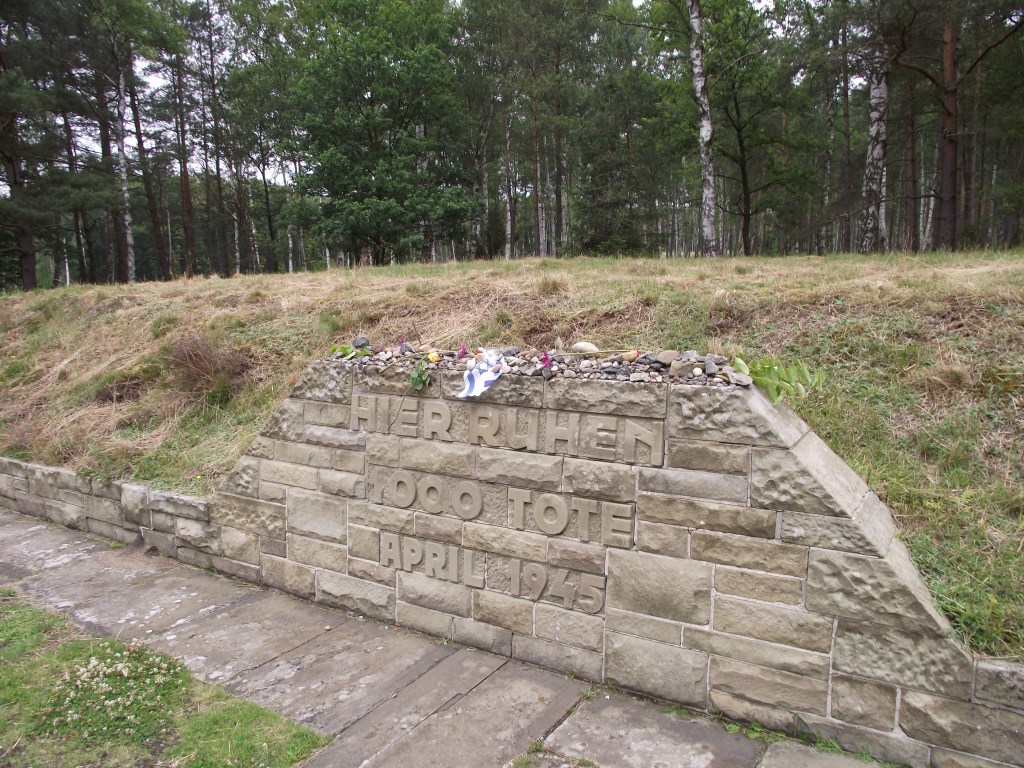
Memorial stones are placed on monument in observance of Jewish tradition (note Israeli flag).
Lightly edited copy of a blast email Debi and I sent out to members of our congregation, Peace Lutheran Church of Springfield, in advance of the seventh meeting an adult faith formation book study on “Caste: The Origins of Our Discontents” by Isabel Wilkerson. We call the group Sundays@6, and it meets over Zoom Sunday evenings. This week’s reading compared German memorials honoring the victims of Nazi atrocities to American monuments glorifying Confederate slaveholders in America, and Debi and I added our own reaction to the memorial at a concentration camp.
A handout is attached for our next session of Sundays@6, Sunday, Nov. 5, at 6 p.m. As always, we’ll meet over Zoom and will be online from 5:45 to chat and work out technical glitches. We’ll be discussing Section 6 of Isabel Wilkerson’s “Caste: The Origins of Our Discontents,” on a topic that’s familiar to anyone who follows American politics and culture, “Backlash.”
In discussing backlash, Wilkerson ranges from the uproar over the removal of Confederate monuments in the South and white grievance over the election of a Black president to ongoing efforts to disenfranchise Black voters. She compares that to Germany, where successive governments have taken proactive steps to come to terms with its history of anti-Semitism and the horrors of the Holocaust.
It raises a question: Would the white backlash against President Obama have occurred if we in America made the same effort to learn from the sins of the past that Germany has since World War II? In the chapter titled “The Symbols of Caste,” Wilkerson suggests perhaps it wouldn’t.
“Rather than honor supremacists with statues on pedestals,” she says, “Germany […] after decades of silence and soul-searching, chose to erect memorials to the victims of its aggressions and to the courageous people who resisted the men who inflicted atrocities on human beings” (346). We don’t want to turn Sundays@6 into our personal travelog, but we directly experienced the effect of this when we visited the Bergen-Belsen concentration camp, where Debi’s Uncle Curtis was imprisoned as a POW.
Unlike Auschwitz and other concentration camps, Bergen-Belsen was burned to the ground in 1945 by liberating British troops, in order to contain a typhus epidemic; today the Bergen-Belsen Memorial (Gedenkstätte) consists of mass graves in a large open clearing and a Documentation Centre that features a permanent exhibition, a bookshop, a library and a museum café. “All original buildings in the adjacent grounds of the former camp were demolished after the war,” as the Gedenkstätte website (linked below) puts it. “The remains of foundations are all that can be found now. Today the grounds are a cemetery with numerous graves and monuments.” The museum hosts school groups and scholarly meetings detailing the history and significance of the camp. As the generations who remember the Holocaust die out, the memorial has shifted its focus to put more emphasis on the educational part of its mission. An Australian visitor, Rob K., summed up the experience for TripAdvisor (linked below) like this:
On retrospect, I am very happy to have come here but part of me wishes I never have. Went through the memorial to see the exhibit that has been constructed as a memorial and it is like a sledgehammer hitting you in the face. Hard to view but unfortunately necessary to put the place into context. Lots and lots of pictures and reading but what it shows was the conditions at the time that the personnel were subjected to. There are some movies but do listen to the warnings as I would not let my kids see the movies as they are graphic.
On the same Tripadvisor page are photos sent in by visitors. They’re not curated, so they appear on the webpage at random, but the juxtaposition is stunning. It gives the same sense we experienced of the natural beauty of the birch and pine forest; the graves of up to 2,500 people each (most with pebbles placed on the gravestones per Jewish tradition); the artifacts, videos and interpretive material in the visitors’ center; and, above all, the silence. Said Rob K., the Australian visitor:
Walking around the grounds was spooky…. Lovely areas of Germany with all these funny mounds. On closer look, [I] realised that they were the mass graves that littered the area. The Russian POW area was hard to stomach as there was just mass grave after mass grave there. Hard but necessary to see. The rest of the area showed the camp site and how it would have looked. Wow is all I can say…..
Would I recommend this place to others. … Yes definitely. Although you feel strange seeing the place, it is part of history. It is what has happened and it is a constant reminder to be decent for future events.
Visiting Bergen-Belsen was an unforgettable experience. And that, of course, is the point of the Memorial.
‘Color of Compromise’ by Jemar Tisby
We have been reviewing a book by Dr. Jemar Tisby, a Presbyterian minister and historian who teaches at a historically Black college in Kentucky, that tells the story of the evangelical and mainline Protestant churches’ role in upholding or (sometimes) challenging institutional racism from the time of the Puritans to the backlash against Black Lives Matter in the present decade. Titled “The Color of Compromise: The Truth about the American Church’s Complicity in Racism,” it doesn’t seek to assign blame as much as to inspire action to overcome the legacy of the past 400 years. As the blurb on the Amazon.com website puts it:
Equal parts painful and inspirational, it details how the American church has helped create and maintain racist ideas and practices. You will be guided in thinking through concrete solutions for improved race relations and a racially inclusive church.
A preview is available on the Amazon website (click on the “Free Preview” button below the photo of the book cover):
“The Color of Compromise” seems like a good next reading for Sundays@6 because: (1) It builds on the history we have studied in “Caste” by Isabell Wilkerson; and (2) it ends not only with a call to action but one that suggests specific, concrete steps the church can take to alleviate things. If we decide as a group to go ahead with it, we can apply for a Thrivent action team grant to buy copies.
Hope to see you Sunday — at 6!
— Debi and Pete
Links
Amazon preview of “The Color of Compromise” by Jemar Tisby https://www.amazon.com/Color-Compromise-American-Churchs-Complicity/dp/0310113601#:~:text=racially%20inclusive%20church.-,The%20Color%20of%20Compromise%3A,today’s%20Black%20Lives%20Matter%20movement
Gedenkstätte Bergen-Belsen, “Your Visit: Directions and Opening Hours,” website https://bergen-belsen.stiftung-ng.de/en/your-visit/directions-and-opening-hours/
Photos of Gedenkstätte Bergen-Belsen, Tripadvisor https://www.tripadvisor.com/Attraction_Review-g198426-d579070-Reviews-or20-Gedenkstatte_Bergen_Belsen-Celle_Lower_Saxony.html#/media-atf/579070/78167465:p/?albumid=-160&type=0&category=-160
Review by Rob K. of Gedenkstätte Bergen-Belsen” [in English], Tripadvisor, October 2018 https://www.tripadvisor.com/Attraction_Review-g198426-d579070-Reviews-or20-Gedenkstatte_Bergen_Belsen-Celle_Lower_Saxony.html
[Uplinked Nov. 9, 2023]

 Ordinary Time